EcoGPT - Regenerative AI
4.7120.00Reviews
Analysis ByAppCompare
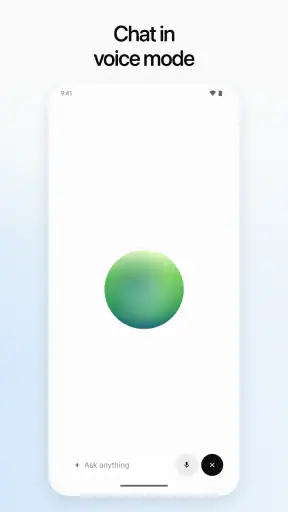
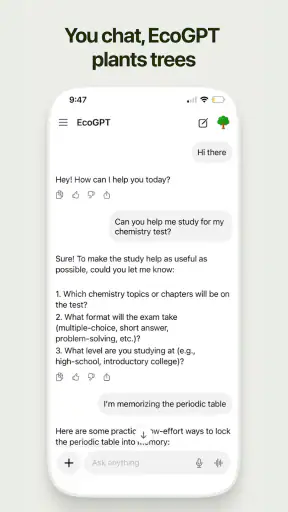
I approached EcoGPT as a productivity app with an unusual purpose: chatting with an AI while helping support tree planting. Its simple store summary makes the idea easy to understand, but using it raises more practical questions. Does the conversation feel quick enough for everyday work? Is it comfortable during longer sessions? What happens when the app is used repeatedly throughout the day, and is the environmental angle enough to make it a better choice than a conventional AI assistant?
My overall impression is that EcoGPT is most interesting when you want useful AI assistance without treating the environmental purpose as an afterthought. The app is free to start, aimed at Everyone, and developed by EcoGPT. It belongs in the productivity category rather than the entertainment space, so I judged it by how naturally it fits into ordinary tasks: drafting, summarizing, brainstorming, planning, and answering questions.
The central appeal is not that it completely replaces every other assistant. Instead, it gives environmentally minded users a reason to try a familiar chat format. That distinction matters. If you only want the fastest possible answer or the deepest specialist tool, another service may suit you better. If you want a lower-friction way to combine AI conversations with a tree-planting mission, this app has a more distinctive reason to remain on your phone.
How EcoGPT feels during everyday use
Speed expectations for short conversations
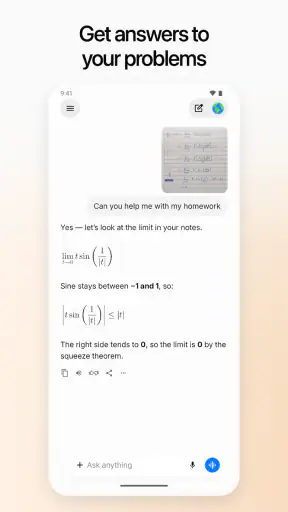
For quick prompts, the experience is easiest to appreciate when the request is clearly defined. I would use it for turning rough notes into a tidy message, suggesting a few ideas for a project, or helping me organize a busy afternoon. These are tasks where the value comes from reducing mental effort rather than producing a perfect final answer in one tap.
The app’s chat-based design also makes it natural to refine a response. Instead of starting over, I can ask for a shorter version, a friendlier tone, or a more practical explanation. That follow-up workflow is more useful than treating every response as a finished document. It also helps control unnecessary back-and-forth: one well-structured prompt usually gives a better starting point than a vague request followed by several corrections.
I would not judge speed only by how rapidly the first response appears. For productivity, the more important question is whether the answer is usable without repeated repair. A fast but poorly focused reply costs time, while a slightly slower response that matches the request can save it. EcoGPT makes the most sense when I give it context, audience, and desired format from the beginning.
There is a practical tip here that is easy to miss: I would prepare prompts as small briefs. For example, rather than asking for “help with an email,” I would explain who will receive it, what outcome I want, and whether the tone should be direct or warm. This reduces the number of follow-up messages and makes the conversation feel more responsive even when the task is complicated.
Where longer or heavier use changes the experience
Short sessions are one thing; using an AI chat repeatedly for planning, writing, and revisions is another. Heavy use can expose the difference between a convenient assistant and a complete professional workflow. EcoGPT is appealing for generating ideas and shaping language, but I would still move important material into a dedicated notes, document, or project-management app once the conversation produces something worth keeping.
That separation is useful because chat is naturally linear. A long conversation can contain several versions of an idea, and finding the final wording later may be less convenient than placing it in a structured document immediately. I would treat the chat as a workshop, not as the permanent filing cabinet for a project.
A realistic example would be preparing a community event. I might ask for a checklist, then request a volunteer message, then adapt the message for a social post, and finally ask for a short reminder. EcoGPT can be valuable across those stages because the same general context can guide several pieces of writing. However, I would verify dates, names, locations, and commitments myself before sending anything. AI is helpful with structure and tone, but responsibility for real-world details remains with me.
Another useful workflow is to divide a large job into separate conversations or clearly separated requests. Asking for a complete campaign, schedule, budget explanation, and public announcement in one sprawling exchange can make the result harder to review. Smaller prompts make mistakes easier to spot and make it clearer which parts are ready to reuse.
Reliability is more than a smooth chat screen
For me, reliability has two layers. The first is whether the app remains usable as a productivity tool. The second is whether I can trust the content enough to act on it. A polished conversation does not guarantee accurate information, and EcoGPT should not be treated as an automatic authority for medical, legal, financial, or safety decisions.
I would use it confidently for low-risk assistance: outlining an article, rewriting a paragraph, creating questions for a meeting, or offering alternative ways to explain a familiar subject. I would be more cautious with current facts, technical instructions, and anything that could cause harm if misunderstood. In those cases, I would check the response against a dependable source rather than accepting fluent wording as proof.
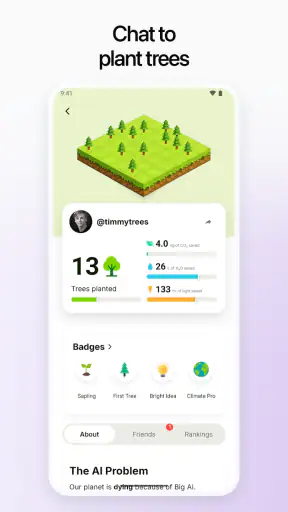
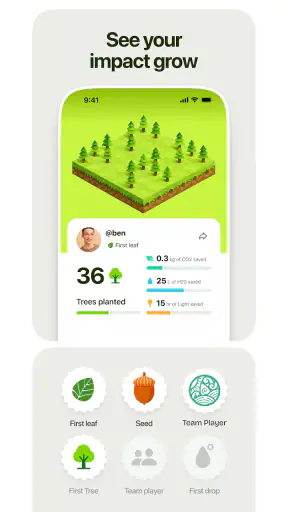
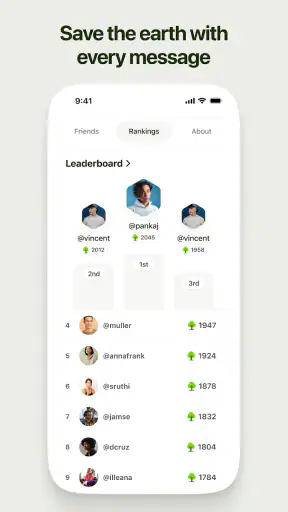
The environmental purpose also deserves a clear-eyed view. The idea of chatting to support tree planting gives the app a meaningful identity, but I would not assume that every conversation has a directly visible or individually traceable result. The responsible way to approach it is to appreciate the mission while avoiding exaggerated expectations about what one prompt accomplishes. The app’s value is both practical and ethical, but those two parts should be judged separately.
One of my preferred habits with AI tools is to keep a human review step before sharing generated text. I look for invented details, overconfident claims, awkward phrasing, and instructions that do not fit the situation. This is especially important when the output represents me publicly. EcoGPT can help me get to a draft faster, but it does not remove the need for judgment.
Device constraints and the cost of convenience
EcoGPT supports devices running Android 8.0 or later, which gives it a broad potential reach among Android users. That matters for people who do not own a recent phone and still want to try an AI productivity app. The Everyone content rating also makes the app approachable for a wide audience, although an age label should never replace sensible supervision or careful use when younger people are involved.
Because the app is designed around online-style conversations, my experience would depend on more than the phone itself. A weak connection, a busy service, or a long prompt can make the interaction feel less immediate than a simple offline notes app. That is not a reason to reject it, but it does affect when I would choose it. I would not make it my only tool for an urgent task that must work without interruption.
Resource demands are best considered in terms of workflow rather than imagined figures. A short exchange should be easier to live with than keeping a long conversation active while repeatedly requesting revisions. If I were trying to conserve battery, mobile data, or attention, I would draft my request first, send one precise prompt, and save the useful result rather than continuously experimenting.
This is also where EcoGPT differs from a basic notes application. Notes are dependable for storing my own words and are usually simpler for quick offline capture. EcoGPT is better when I need transformation: turning fragments into an outline, changing tone, comparing approaches, or finding a starting point. The choice is not either-or. I would use notes for memory and organization, and the AI chat for active thinking.
Free access, paid extras, and deciding whether it fits
EcoGPT is free to download and use as an entry point, while in-app purchases are listed at $9.99 per item. That makes it easy to test the basic experience before deciding whether any paid option is worthwhile. I would avoid paying simply because the environmental message feels appealing; first I would check whether the app actually fits my recurring tasks and whether the additional purchase solves a problem I regularly have.
This pricing structure makes the app more suitable for curious users than for people who already know they need a large, specialized productivity suite. A casual user can explore the chat format without committing immediately. A frequent user should think about how often the app will be used, whether the free experience covers the important workflow, and whether the paid item offers enough practical value for that pattern of use.
There is also a psychological trade-off. The tree-planting concept may encourage me to return to the app instead of opening a less purposeful alternative, but purpose alone cannot compensate for frustrating performance or weak answers. I would keep it installed only if the environmental motivation and the actual productivity benefit reinforce each other.
Who will get the most from it
EcoGPT is a good match for students, independent workers, volunteers, writers, and environmentally conscious users who want a general-purpose AI conversation tool for everyday support. It is particularly useful when the task begins with uncertainty: “How should I organize this?” “Can you make this clearer?” or “What are several ways to approach this?”
It can also help people who find blank pages intimidating. Starting with a rough request and then refining the answer is often easier than composing a polished draft from nothing. I would use it for meeting preparation, personal planning, idea generation, and rewriting messages where the stakes are modest and I can review the result.
On the other hand, I would skip it as my primary choice if I needed a dedicated calendar, a full document editor, a specialized research database, or a tool with strong project tracking. A chat assistant can suggest a plan, but it does not automatically become a complete system for managing deadlines and files. Users who need advanced professional controls may prefer a conventional productivity suite and use an AI feature inside that environment.
I would also be cautious about relying on it for confidential material. Before pasting private work, personal records, or sensitive correspondence into any AI chat, I would consider whether that is appropriate for the situation. EcoGPT’s environmental purpose does not change the need for sensible information handling.
What the current release means for expectations
The current version is 1.2.3, and the app was released on Apr 10, 2026. I would interpret that as a product that should be approached with reasonable expectations rather than as a mature replacement for every established productivity tool. A newer app can have an appealing direction and still need time to refine edge cases, navigation, and the small details that matter during repeated daily use.
That does not make it a poor choice. It simply changes how I would test it. I would begin with low-risk tasks, see how well it handles my writing style, and pay attention to whether the app recovers gracefully when a conversation becomes confusing or a request needs correction. If a response misses the point, the practical test is whether a clearer follow-up gets the interaction back on track without forcing me to abandon the session.
I would also avoid building an important deadline around an unfamiliar workflow on the first day. A short trial with ordinary tasks tells me more than a single impressive answer. The strongest sign of usefulness is not novelty; it is whether I naturally reach for the app again because it saves effort.
My performance verdict
EcoGPT succeeds by giving AI productivity a clear environmental identity. Its best use is not as a magical answer machine, but as a conversational partner for turning rough thoughts into workable drafts, lists, plans, and alternatives. I find the concept more compelling when I use it deliberately: concise prompts, realistic expectations, and a human check before acting on important output.
Its limitations are equally clear. Chat is not the same as organized project management, AI responses still need verification, and a free starting point does not automatically make every paid option worthwhile. Users who demand specialized controls or dependable offline work may be happier elsewhere. Those who already have an assistant they trust may not find enough functional difference to switch.
Still, the combination of accessible productivity help and a tree-planting purpose gives EcoGPT a reason to exist beyond another generic chat interface. It has reached over one million installs and holds a 4.7 average from around 8.5 thousand ratings, which suggests that the concept has connected with a substantial audience. I would recommend trying it if you want a practical AI helper and care about the idea behind the tool, while keeping a separate notes or document app for anything you need to preserve and verify.
My final advice is simple: start with one ordinary task you already understand. Ask EcoGPT to improve a draft, organize a plan, or offer several approaches, then judge the result by the time it actually saves you. If the answers are useful and the mission gives you an extra reason to return, it may earn a regular place in your productivity routine. If you need precision, deep specialization, or a complete work-management system, treat it as a supporting tool rather than the center of your workflow.
FAQ
What is EcoGPT - Regenerative AI designed to do?
EcoGPT - Regenerative AI is presented as an AI-focused application that encourages more environmentally responsible thinking and action. Depending on the available tools, it may help users explore sustainability topics, generate ideas, understand ecological challenges, or plan greener habits. Before downloading, review the current app description carefully, since its exact features, supported languages, and AI capabilities may change with updates.
How does EcoGPT provide its answers, and can the information be trusted?
As with other generative AI applications, EcoGPT may produce answers by analyzing your prompts and generating responses from learned patterns or connected information sources. Its suggestions can be useful for brainstorming and general education, but they should not automatically be treated as expert environmental, legal, financial, or scientific advice. Verify important claims through reliable sources before making decisions based on the app.
Does EcoGPT - Regenerative AI require an account or subscription?
The access model can vary by platform and app version. Some features may be available without registration, while advanced requests, higher usage limits, or additional tools could require an account or paid subscription. Check the Google Play Store or Apple App Store listing for current pricing, trial conditions, renewal details, and in-app purchase information before starting a subscription.
What privacy considerations should users know before using EcoGPT?
Users should avoid entering passwords, private documents, financial details, confidential work information, or sensitive personal data into any AI chatbot unless the privacy policy clearly explains how that information is handled. Before installation, review EcoGPT’s permissions, data collection disclosures, retention practices, and whether prompts may be used to improve the service or shared with third-party providers.
Is EcoGPT suitable for children and for professional environmental work?
EcoGPT may be useful for general learning, idea generation, and everyday sustainability questions, but suitability depends on the app’s age rating, content safeguards, and privacy controls. Parents should check these details before allowing children to use it. Professionals should also treat its output as a starting point, confirming recommendations with qualified experts and authoritative environmental data.
Pros
- Provides eco-focused answers and practical sustainability suggestions.
- Encourages users to consider environmental impact in everyday decisions.
- Simple chat-based interface is easy for beginners to navigate.
- Useful for brainstorming greener alternatives and project ideas.
- Can make sustainability topics feel more accessible and engaging.
Cons
- AI responses may contain inaccuracies or oversimplify complex climate issues.
- Advice can be generic and may not suit local regulations or conditions.
- Some features may require an account
- subscription
- or usage limits.
- Environmental claims should be verified with trusted scientific sources.
- Results depend heavily on how clearly and specifically questions are written.